 Add to Chrome
 Add to Firefox
 Add to Edge
Credit Assignment with Resets in Language Model Reasoning
May 26, 2026
Contemporary reinforcement learning with verifiable reward methods post-train language models on multi-step reasoning by assigning a single outcome reward uniformly across all tokens in a trajectory. Such uniform assignment ignores which steps contributed to success or failure. Improving credit assignment can address this limitation by enabling targeted refinement of faulty reasoning steps, rather than updating entire trajectories uniformly. Resets are one such simple mechanism, enabling more precise credit assignment by returning to an intermediate state and resampling counterfactual continuations, so that outcome differences can be attributed to decisions made at that point. We propose two such methods: Random-Reset Policy Optimization (RRPO), where reset states are drawn randomly from reasoning steps, and Self-Reset Policy Optimization (SRPO), where the model self-localizes the erroneous step in an incorrect trajectory and resets there. We analyze these methods within the Conservative Policy Iteration (CPI) framework. Extending CPI with a credit-assignment oracle that targets improvable states yields provable improvements over random resets. Across models and reasoning benchmarks, SRPO consistently outperforms standard GRPO and RRPO by sampling multiple suffix continuations at a self-localized reset and learning from their rewards, using only the model itself with no external supervision.

Hack-Verifiable Environments: Towards Evaluating Reward Hacking at Scale
May 20, 2026Aligning autonomous agents with human intent remains a central challenge in modern AI. A key manifestation of this challenge is reward hacking, whereby agents appear successful under the evaluation signal while violating the intended objective. Reward hacking has been observed across a wide range of settings, yet methods for reliably measuring it at scale remain lacking. In this work, we introduce a new evaluation paradigm for measuring reward hacking. Whereas prior studies have primarily analyzed it post hoc by inspecting agent trajectories, we instead embed detectable reward hacking opportunities directly into environments. This makes their exploitation verifiable by design, enabling deterministic and automated measurement of whether and how agents exploit such vulnerabilities. We instantiate this approach in $\textit{TextArena}$ and release $\textit{Hack-Verifiable TextArena}$, a testbed in which reward hacking can be measured reliably. Using this benchmark, we analyze reward hacking behavior across language models in diverse environments and settings. We open source the code at https://github.com/MajoRoth/hack-verifiable-environments/.
Gaze patterns predict preference and confidence in pairwise AI image evaluation
Mar 25, 2026Preference learning methods, such as Reinforcement Learning from Human Feedback (RLHF) and Direct Preference Optimization (DPO), rely on pairwise human judgments, yet little is known about the cognitive processes underlying these judgments. We investigate whether eye-tracking can reveal preference formation during pairwise AI-generated image evaluation. Thirty participants completed 1,800 trials while their gaze was recorded. We replicated the gaze cascade effect, with gaze shifting toward chosen images approximately one second before the decision. Cascade dynamics were consistent across confidence levels. Gaze features predicted binary choice (68% accuracy), with chosen images receiving more dwell time, fixations, and revisits. Gaze transitions distinguished high-confidence from uncertain decisions (66% accuracy), with low-confidence trials showing more image switches per second. These results show that gaze patterns predict both choice and confidence in pairwise image evaluations, suggesting that eye-tracking provides implicit signals relevant to the quality of preference annotations.
Structure Enables Effective Self-Localization of Errors in LLMs
Feb 02, 2026Self-correction in language models remains elusive. In this work, we explore whether language models can explicitly localize errors in incorrect reasoning, as a path toward building AI systems that can effectively correct themselves. We introduce a prompting method that structures reasoning as discrete, semantically coherent thought steps, and show that models are able to reliably localize errors within this structure, while failing to do so in conventional, unstructured chain-of-thought reasoning. Motivated by how the human brain monitors errors at discrete decision points and resamples alternatives, we introduce Iterative Correction Sampling of Thoughts (Thought-ICS), a self-correction framework. Thought-ICS iteratively prompts the model to generate reasoning one discrete and complete thought at a time--where each thought represents a deliberate decision by the model--creating natural boundaries for precise error localization. Upon verification, the model localizes the first erroneous step, and the system backtracks to generate alternative reasoning from the last correct point. When asked to correct reasoning verified as incorrect by an oracle, Thought-ICS achieves 20-40% self-correction lift. In a completely autonomous setting without external verification, it outperforms contemporary self-correction baselines.
Imbalanced Gradients in RL Post-Training of Multi-Task LLMs
Oct 22, 2025Multi-task post-training of large language models (LLMs) is typically performed by mixing datasets from different tasks and optimizing them jointly. This approach implicitly assumes that all tasks contribute gradients of similar magnitudes; when this assumption fails, optimization becomes biased toward large-gradient tasks. In this paper, however, we show that this assumption fails in RL post-training: certain tasks produce significantly larger gradients, thus biasing updates toward those tasks. Such gradient imbalance would be justified only if larger gradients implied larger learning gains on the tasks (i.e., larger performance improvements) -- but we find this is not true. Large-gradient tasks can achieve similar or even much lower learning gains than small-gradient ones. Further analyses reveal that these gradient imbalances cannot be explained by typical training statistics such as training rewards or advantages, suggesting that they arise from the inherent differences between tasks. This cautions against naive dataset mixing and calls for future work on principled gradient-level corrections for LLMs.
Internalizing Self-Consistency in Language Models: Multi-Agent Consensus Alignment
Sep 18, 2025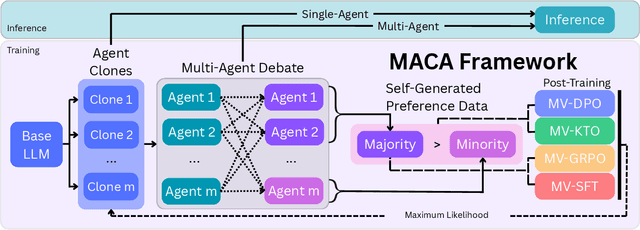
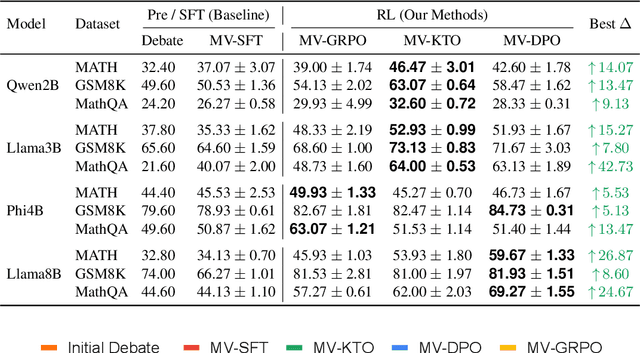
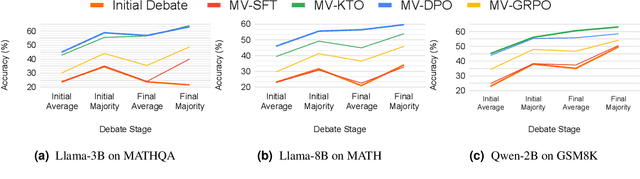
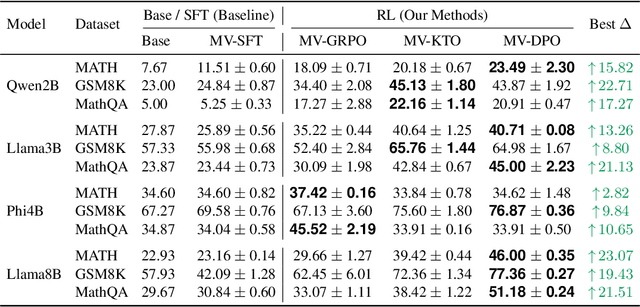
Language Models (LMs) are inconsistent reasoners, often generating contradictory responses to identical prompts. While inference-time methods can mitigate these inconsistencies, they fail to address the core problem: LMs struggle to reliably select reasoning pathways leading to consistent outcomes under exploratory sampling. To address this, we formalize self-consistency as an intrinsic property of well-aligned reasoning models and introduce Multi-Agent Consensus Alignment (MACA), a reinforcement learning framework that post-trains models to favor reasoning trajectories aligned with their internal consensus using majority/minority outcomes from multi-agent debate. These trajectories emerge from deliberative exchanges where agents ground reasoning in peer arguments, not just aggregation of independent attempts, creating richer consensus signals than single-round majority voting. MACA enables agents to teach themselves to be more decisive and concise, and better leverage peer insights in multi-agent settings without external supervision, driving substantial improvements across self-consistency (+27.6% on GSM8K), single-agent reasoning (+23.7% on MATH), sampling-based inference (+22.4% Pass@20 on MATH), and multi-agent ensemble decision-making (+42.7% on MathQA). These findings, coupled with strong generalization to unseen benchmarks (+16.3% on GPQA, +11.6% on CommonsenseQA), demonstrate robust self-alignment that more reliably unlocks latent reasoning potential of language models.
FragmentNet: Adaptive Graph Fragmentation for Graph-to-Sequence Molecular Representation Learning
Feb 03, 2025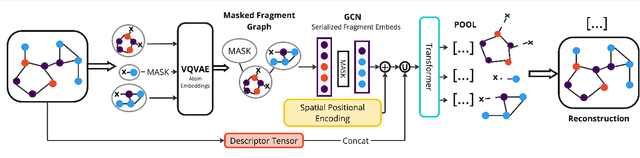
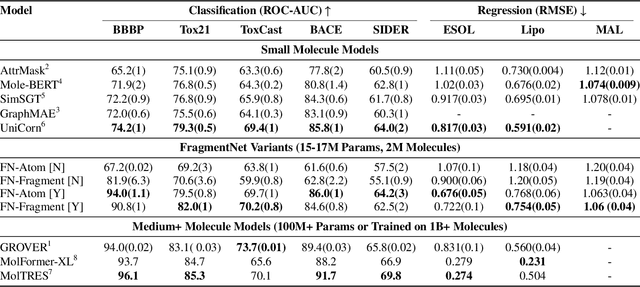
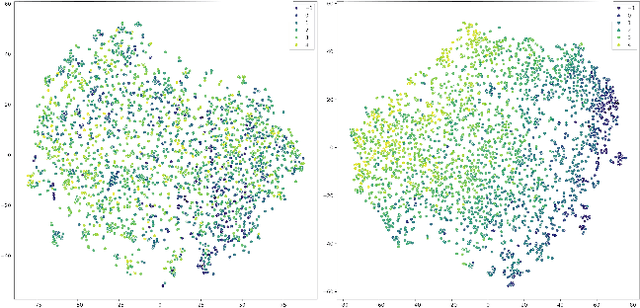
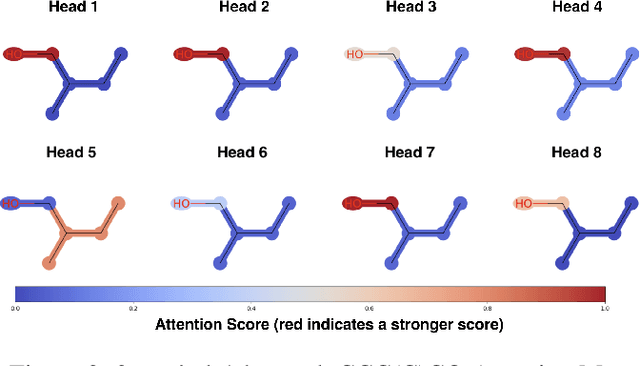
Molecular property prediction uses molecular structure to infer chemical properties. Chemically interpretable representations that capture meaningful intramolecular interactions enhance the usability and effectiveness of these predictions. However, existing methods often rely on atom-based or rule-based fragment tokenization, which can be chemically suboptimal and lack scalability. We introduce FragmentNet, a graph-to-sequence foundation model with an adaptive, learned tokenizer that decomposes molecular graphs into chemically valid fragments while preserving structural connectivity. FragmentNet integrates VQVAE-GCN for hierarchical fragment embeddings, spatial positional encodings for graph serialization, global molecular descriptors, and a transformer. Pre-trained with Masked Fragment Modeling and fine-tuned on MoleculeNet tasks, FragmentNet outperforms models with similarly scaled architectures and datasets while rivaling larger state-of-the-art models requiring significantly more resources. This novel framework enables adaptive decomposition, serialization, and reconstruction of molecular graphs, facilitating fragment-based editing and visualization of property trends in learned embeddings - a powerful tool for molecular design and optimization.
A Novel Real-Time Full-Color 3D Holographic (Diffractive) Video Capture, Processing, and Transmission Pipeline Using Off-The-Shelf Hardware
Feb 02, 2025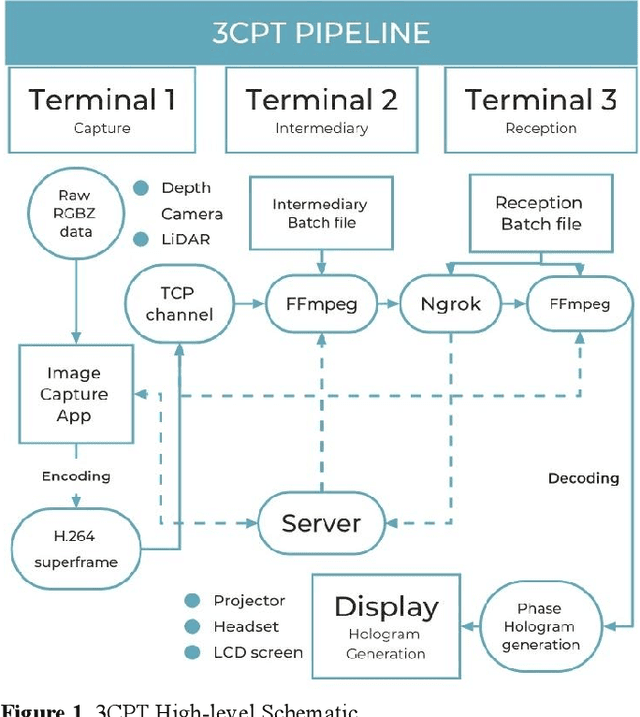
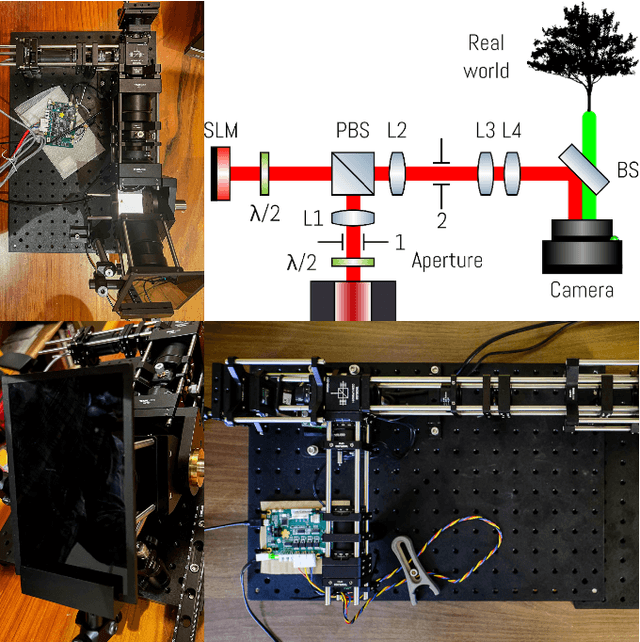


This paper details the world's first live 3D holographic (diffractive) video call using off-the-shelf hardware. We introduce a novel pipeline that facilitates the capture, processing, and transmission of RGBZ data, using an iPhone for image and depth capture with VividQ's SDK for hologram generation and hardware for display.
* Published and Presented at Session 63: Emerging Approaches for AR/VR/MR, SID Display Week 2022. 4 pages, 9 figures
MVMTnet: A Multi-variate Multi-modal Transformer for Multi-class Classification of Cardiac Irregularities Using ECG Waveforms and Clinical Notes
Feb 21, 2023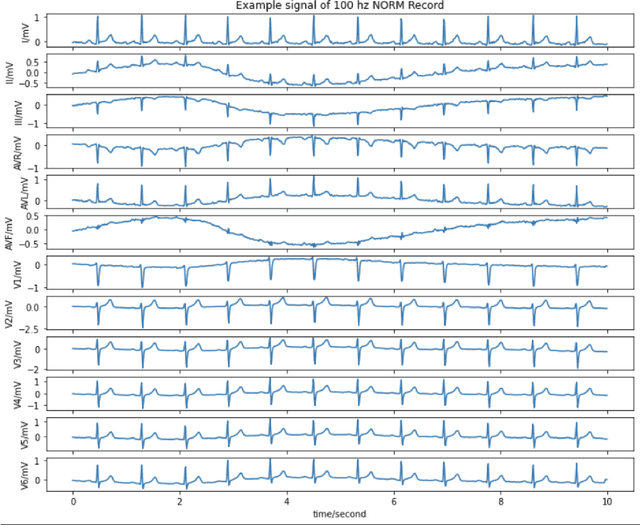

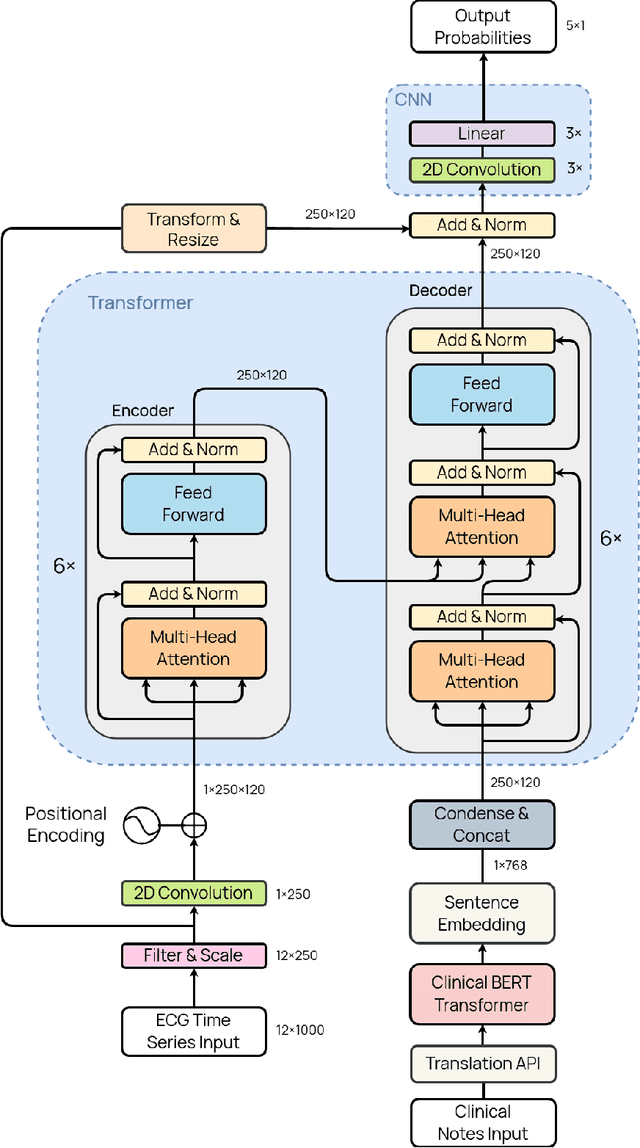

Deep learning provides an excellent avenue for optimizing diagnosis and patient monitoring for clinical-based applications, which can critically enhance the response time to the onset of various conditions. For cardiovascular disease, one such condition where the rising number of patients increasingly outweighs the availability of medical resources in different parts of the world, a core challenge is the automated classification of various cardiac abnormalities. Existing deep learning approaches have largely been limited to detecting the existence of an irregularity, as in binary classification, which has been achieved using networks such as CNNs and RNN/LSTMs. The next step is to accurately perform multi-class classification and determine the specific condition(s) from the inherently noisy multi-variate waveform, which is a difficult task that could benefit from (1) a more powerful sequential network, and (2) the integration of clinical notes, which provide valuable semantic and clinical context from human doctors. Recently, Transformers have emerged as the state-of-the-art architecture for forecasting and prediction using time-series data, with their multi-headed attention mechanism, and ability to process whole sequences and learn both long and short-range dependencies. The proposed novel multi-modal Transformer architecture would be able to accurately perform this task while demonstrating the cross-domain effectiveness of Transformers, establishing a method for incorporating multiple data modalities within a Transformer for classification tasks, and laying the groundwork for automating real-time patient condition monitoring in clinical and ER settings.